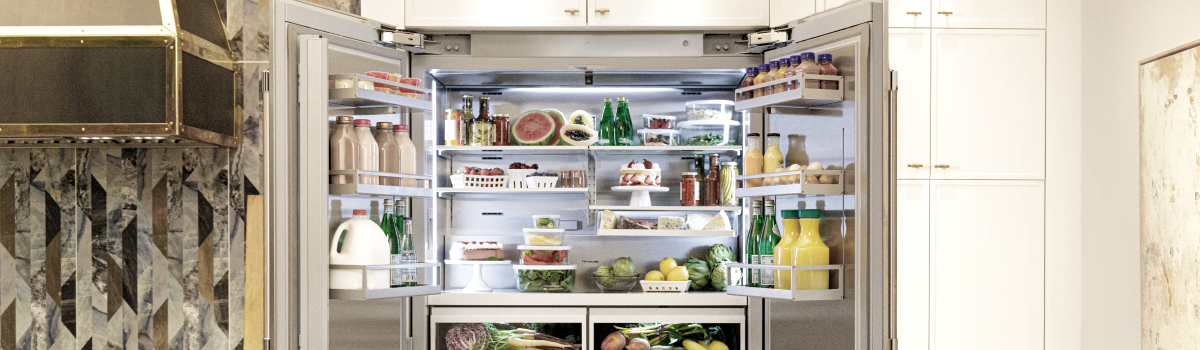
You open the fridge and something’s off. The milk isn’t as cold as it should be, the produce is wilting early, maybe the door feels warmer inside than usual — but the freezer is still rock solid. It’s one of the most common Thermador refrigerator problems, and the reassuring part is that “warm fridge, cold freezer” almost always points to a short list of causes, not a dead appliance.
Below is the full picture: what’s actually happening inside, exactly what you can check yourself in a few minutes, what a technician does if it goes past that, and how long your food really has while you sort it out.
Food already warming up? Don’t wait — call 844-975-6696 or book a same-day visit.
Quick guide: what your fridge is telling you
| What you’re seeing | Most likely cause | Can you fix it yourself? |
|---|---|---|
| Fridge warm, freezer still cold | Blocked vents or a stalled evaporator fan | Yes — clear the vents first |
| Whole unit cooling weakly | Dirty condenser coils | Yes — vacuum the coils |
| Warm even at the right setting | Worn or cracked door seal | Yes — inspect and replace the seal |
| Frost on the back wall, still warm | Defrost system fault | No — call a technician |
| Compressor clicking on and off, or hot | Compressor / sealed system | No — call a technician |
What “not cooling” actually means on a Thermador
A refrigerator doesn’t make cold — it moves heat out and circulates cold air back in. Cold air is produced at the evaporator (usually in the freezer section) and a fan pushes it up into the fresh-food compartment through a set of vents. That single fact explains the most common version of this problem: when the freezer stays cold but the fridge turns warm, the cold is being made just fine — it simply isn’t being moved where it needs to go.
Here’s what each of the usual suspects is actually doing, and how to recognize it:
- Blocked air vents. The vents between the freezer and fridge get packed shut with food, containers, or a build-up of ice. Cold air can’t pass through, so the fridge warms while the freezer stays cold. Tell-tale sign: the back or top of the fridge (near the vents) is colder than the rest, and it got worse after a big grocery haul.
- A stalled evaporator fan. This is the fan that blows cold air into the fridge. If its motor fails, the freezer keeps freezing but no cold reaches the fridge at all. Tell-tale sign: open the fridge and listen — you should hear a soft whir. Dead silence where a fan should run is the clue.
- Dirty condenser coils. These coils (behind or beneath the unit) shed the heat the fridge pulls out of your food. Caked in dust and pet hair, they can’t release heat, so the whole system runs hot and struggles to hold temperature. Tell-tale sign: the fridge runs almost constantly, feels warm at the back or underneath, and cooling is weak everywhere, not just up top.
- A worn door seal. The rubber gasket around the door keeps warm room air out. Once it hardens or tears, warm, humid air leaks in faster than the fridge can cool it. Tell-tale sign: condensation near the door, food nearest the door spoiling first, or a dollar bill closed in the door that pulls out with no resistance.
- A faulty temperature sensor (thermistor). This tells the fridge how cold it actually is. If it misreads, the fridge shuts cooling off too early and never reaches the real target. Tell-tale sign: the display shows the right number, but a thermometer inside says otherwise.
Step-by-step: what to check yourself first
Work through these in order — each step both rules out a cause and tells you something specific, so even the ones that don’t fix it point you (and any technician) closer to the answer. Set aside about fifteen minutes and grab a fridge thermometer and a vacuum. Where a step involves cleaning behind the fridge, unplug it first.
- Confirm the temperature setting. Do this: open the control panel and check the numbers. Thermador recommends the fridge at about 37 °F and the freezer at 0 °F. What it means: settings get knocked off by accident — while cleaning, or by a child — surprisingly often, and a fridge dialled to 45 °F will feel “not cold” for a completely harmless reason. Reset it and give it four to six hours to recover before judging.
- Measure the real temperature. Do this: stand a thermometer in a glass of water, leave it in the middle of the fridge overnight, and read it in the morning. What it means: water holds a steady reading, so this shows the true average temperature, not the brief warm spike you get from opening the door. If it reads 37–40 °F, the fridge is fine and the problem may be habits or a door left ajar; if it’s well above 40 °F, you have a real cooling fault to chase.
- Clear and inspect the vents. Do this: pull food back from the vents inside both the fridge and freezer, especially the ones on the back wall and near the top. Look for ice building up over the vent openings. What it means: if a wall of groceries or a sheet of frost is blocking the vents, cold air can’t reach the fridge — clearing them often fixes it outright. Frost over the vents, though, hints at a defrost problem worth flagging.
- Listen for the evaporator fan. Do this: open the fridge and press and hold the door light switch so the unit keeps running as if the door were shut. Put your ear near the back wall of the freezer. What it means: a soft, steady whir is the fan doing its job. Dead silence — with the compressor clearly running — usually means the fan motor has stalled, which is the single most common reason a freezer stays cold while the fridge goes warm. Note it for the technician.
- Clean the condenser coils. Do this: unplug the fridge, find the coils (behind the kick panel at the bottom on most Thermador units, or on the back), and vacuum off the dust and pet hair. What it means: caked coils can’t shed heat, so the fridge runs flat out and still falls short. On a unit that runs almost constantly and feels warm underneath, this one job restores proper cooling more often than any other — and it costs nothing.
- Check the condenser fan by the compressor. Do this: with the fridge still unplugged and the back panel off, look at the fan next to the compressor. Spin it by hand. What it means: it should turn freely. If it’s stiff, jammed with debris, or the blades are damaged, it can’t cool the compressor — clear anything obvious, but a seized fan needs replacing.
- Inspect the door seal. Do this: run your hand around the closed door feeling for escaping cold, and close a dollar bill in the door at several points, then pull. What it means: if the bill slides out with no drag anywhere, the gasket has lost its grip there and is leaking warm air in. Look, too, for cracks, tears, or flattened sections. A failing seal makes the fridge work harder and never quite keep up.
- Feel for a frost pattern on the back wall. Do this: look at the inside back wall of the fridge/freezer. What it means: a thick, uneven wall of ice building up there — while the food still isn’t cold — is a classic defrost-system fault. That’s not something to scrape away; note it and call, because it will keep returning until the heater or sensor is fixed.
- Give it time to recover. Do this: if you just restocked, left the door open, or had a power cut, plug everything back and wait. What it means: a fridge that’s had a big warm load or an outage can take several hours to pull back down to temperature — that’s normal, not a fault. Only judge it once it’s had that time undisturbed.
If the setting is right, the vents are clear, the coils are clean, the seals grip, and it’s had time to recover — but the fridge is still warm — the cause is deeper in the system (the fan motor, the sensor, the defrost circuit, or the sealed refrigerant system), and that’s where a technician comes in.
When to stop and call a technician
Some of this genuinely isn’t a DIY fix, and pushing it can turn a small repair into a replacement. It helps to split it into two levels of urgency.
Book a visit soon if:
- The evaporator fan is silent while the compressor runs. The motor sits behind an interior panel and needs replacing — not a job you can reach without partly dismantling the freezer, but not an emergency either as long as the freezer still holds.
- There’s a frost wall on the back panel that keeps returning after you clear it. That’s a defrost heater, sensor, or timer fault; scraping the ice only buys a day or two before it’s back.
- The display shows the right temperature but a thermometer disagrees. The thermistor is misreading and shutting cooling off early — it needs testing with a meter and replacing.
Call right away — and stop relying on the fridge if:
- The compressor clicks on and off repeatedly, hums loudly, or is hot to the touch. That points to the compressor or its start relay, and a compressor left to short-cycle can fail outright — the single most expensive part in the fridge.
- The fridge runs constantly and never gets cold even with spotless coils and a good seal. The sealed refrigerant system may have lost charge or blocked — and refrigerant work is legally restricted to certified technicians, so it’s never DIY.
- You’ve worked through every check above and food is now at risk. At that point the diagnosis matters less than getting cold restored before the contents spoil.
Why these aren’t DIY: the fan motor and sensor live behind sealed panels and need meter testing to confirm before you spend on parts; the compressor carries high voltage; and the refrigerant circuit requires EPA-certified handling and specialised gauges. Guessing and swapping parts on a sealed system usually costs more than a proper diagnosis. If you’ve reached this point, professional Thermador refrigerator repair gets it identified once and fixed with the right part.
What the repair actually involves
Knowing what happens on a visit takes the mystery — and the worry about cost — out of picking up the phone. Here’s how a “not cooling” call typically goes from start to finish.
The diagnosis. A technician works the airflow in a set order rather than swapping parts on a hunch. They confirm the real fridge and freezer temperatures, check whether the evaporator fan spins and draws the correct current, test the thermistor and control signals with a meter, inspect the defrost components for ice or a failed heater, and check the condenser fan and coils. Within about twenty to thirty minutes they can usually tell you exactly which part is at fault — and, just as importantly, which parts are fine so you’re not paying to replace them.
The fix, by fault:
- A failed evaporator fan motor — the most common cause of “warm fridge, cold freezer” — is a defined part swap behind the rear interior panel, usually completed the same visit.
- A faulty thermistor or control board is confirmed by meter and replaced with the correct part for your exact model, then the fridge is watched to confirm it holds temperature.
- A defrost fault (heater, sensor, or timer) is isolated to the single failed component and replaced — cheaper and cleaner than replacing the whole assembly.
- A sealed-system issue (lost refrigerant charge or a blockage) is the one genuinely major repair, needs certified refrigerant handling, and is where an honest technician tells you plainly whether it’s worth fixing versus replacing the unit.
What drives the cost. The two things that move the price are the part itself and whether the sealed system is involved. A fan, sensor, seal, or defrost part is a modest, defined repair — and because we carry the common ones on the truck, most are done in one visit. A sealed-system repair is the outlier, and it’s the one case where replacement sometimes makes more sense. Either way you get a written estimate before any work begins, the parts are genuine, and the work is backed by a warranty — so there are no surprises at the end.
How long does food last if the fridge fails?
This is the practical question when you’re deciding how urgently to act. Per USDA food-safety guidelines, refrigerated food stays safe for about four hours once the fridge climbs above 40 °F, provided you keep the door shut. Perishables — meat, dairy, leftovers, cut produce — should be discarded after that. The freezer buys you more time: the USDA notes a full freezer holds safe temperatures for roughly 48 hours unopened, a half-full one about 24. The single best thing you can do while you wait for a repair is simple: keep the doors closed and don’t keep opening them to check.
How to keep it from happening again
- Vacuum the condenser coils twice a year — dust is the number-one silent cause of weak cooling, and this one habit prevents most of them.
- Don’t overpack. Leave room around the interior vents so air can circulate freely.
- Wipe the door seal clean now and then, and replace it at the first crack rather than waiting.
- Let hot leftovers cool before they go in — a tray of hot food makes the whole compartment work harder.
- Leave breathing room around the back and sides of the unit so it can shed heat.
- Keep the doors closed. Obvious, but a door left ajar even slightly is a constant leak of cold.
Frequently asked questions
Q: Why is my Thermador fridge warm but the freezer is still cold?
A: Because the cold is being made but not moved. Usually it’s a stalled evaporator fan or blocked vents stopping cold air from reaching the fresh-food side. Clear the vents first; if the fan is silent, it needs service.
Q: Why did my Thermador stop cooling after a power outage?
A: Sometimes it just needs a few hours to recover. If it’s still warm after that, the outage may have tripped the control board or disturbed a sensor — a quick diagnostic sorts out which.
Q: Why is only part of my fridge cold?
A: Uneven cooling almost always comes back to airflow — a vent blocked by a tall container, or a fan that’s only partly working. Rearrange the shelves and clear the vents before suspecting anything bigger.
Q: Why does my fridge run constantly but stay warm?
A: That’s the signature of dirty condenser coils or a struggling sealed system — the fridge runs flat out but can’t shed heat, so it never catches up. Clean the coils first; if it keeps running warm, have the system checked.
Q: Is a warm fridge worth repairing, or should I replace it?
A: Thermador refrigerators are built to be serviced, and most causes — a fan, a sensor, a seal — are a small fraction of what the unit is worth. Only a major sealed-system failure tips the math toward replacement, and we’ll tell you honestly if that’s where you are.
Still not cooling? We’ll get it cold again
If you’ve checked the settings, vents, coils, and seal and the fridge is still warm, it’s a part that needs a technician — and with food on the line, it’s not worth waiting. We handle Thermador refrigerator repair every day, carry the common fan, sensor, and seal parts on the truck, and give you a written estimate before any work starts.
Call 844-975-6696 or book online. Same-day service is usually available in New York, Los Angeles, Chicago, San Francisco, Houston, and Miami.